
The Human Development Tour reached Dawki Primary Health Centre on 17th March 2026, bringing together district officials, frontline workers, and community leadership as part of a broader effort to strengthen last-mile delivery of health and nutrition services in the Amlarem subdivision .
Serving a population of nearly 13,000 across 27 villages, Dawki PHC presents a mixed picture of steady progress and persistent gaps. Institutional deliveries stand at 75 percent and immunisation coverage at 96 percent, with zero maternal deaths recorded. At the same time, 13 infant deaths since April 2025 and relatively low NCD screening coverage indicate areas that require deeper focus.
The visit was anchored around the launch of the Chief Minister’s Headman Fellowship (CMHF), a one-year effort to mobilise headmen, faith leaders, and SHGs to take ownership of human development outcomes. The emphasis was clear. While infrastructure has improved, the next phase of development must be driven by outcomes in health, nutrition, and overall wellbeing.
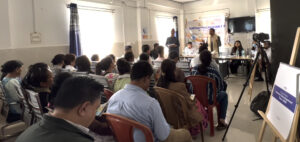
Maternal health discussions reflected both achievement and urgency. While Dawki has sustained zero maternal deaths, the need to strengthen early registration of pregnancies was highlighted, with first trimester registration currently at 64 percent. Early registration remains critical, particularly as the first three months are essential for foetal brain development and timely antenatal care.
The expansion of the Chief Minister’s Safe Motherhood Scheme to include childcare support was positioned as a key intervention. By enabling SHGs and Village Organisations to support families with young children during institutional delivery, the programme addresses one of the most practical barriers to accessing care. At the same time, there is a growing push to involve faith leaders in pre-marital and pre-pregnancy counselling, strengthening awareness even before pregnancy begins.
Child nutrition and early development formed the second major pillar of the engagement. Despite relatively strong service coverage, stunting and poor nutrition practices remain a concern. The importance of exclusive breastfeeding for the first six months, followed by diverse complementary feeding, was emphasised alongside capacity-building efforts, including training on breastfeeding techniques in collaboration with institutions such as IIT Bombay.
The discussions also drew attention to local strengths. Practices such as storytelling, lullabies, and early engagement with children, widely observed in West Jaintia Hills, have been shown to positively influence socio-emotional and cognitive development. At the same time, the burden of caregiving continues to fall heavily on women, pointing to the need for greater involvement of fathers in early childhood care.
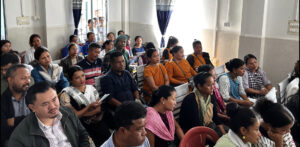
Infant mortality remains a critical concern, with 13 deaths recorded at the PHC. Strengthening nutrition, caregiving practices, and early health-seeking behaviour was identified as essential to improving child survival outcomes.
The third area of focus was adult male health. With non-communicable diseases emerging as a major driver of early mortality, there is a growing emphasis on regular screening and preventive care. Community leaders were encouraged to promote health awareness and create local practices that normalise screening for conditions such as hypertension, diabetes, cancer, and tuberculosis.
Community interactions reflected both engagement and expectation. Issues raised included the absence of ultrasound facilities, shortages of ANMs in sub-centres, and the need for additional medical staff and infrastructure. These concerns were acknowledged alongside broader efforts to strengthen frontline systems and improve service delivery.
A recurring theme across the visit was the importance of convergence. Improving human development outcomes requires coordination across departments, community institutions, and frontline workers. The CM Headman Fellowship, in this context, serves as a platform to bring these efforts together, with monthly community-level discussions proposed to track progress on key goals.