
As Meghalaya prepares for the rollout of a new rural development Act the Viksit Bharat-Guarantee for Rozgar and Ajeevika Mission (Gramin) (VB-G RAM G), ,in the upcoming financial year, a state-level workshop brought together officials from districts and blocks to align systems, clarify implementation pathways, and build readiness on the ground.
Opening the session, Shri Sibhi C. Sadhu, IAS, Director of the Community & Rural Development Department, positioned the workshop as a critical step in the state’s transition. Coming soon after the introduction of the legislation, he noted that this was among the first such exercises in the country, making it an important platform to establish clarity and coordination early on.
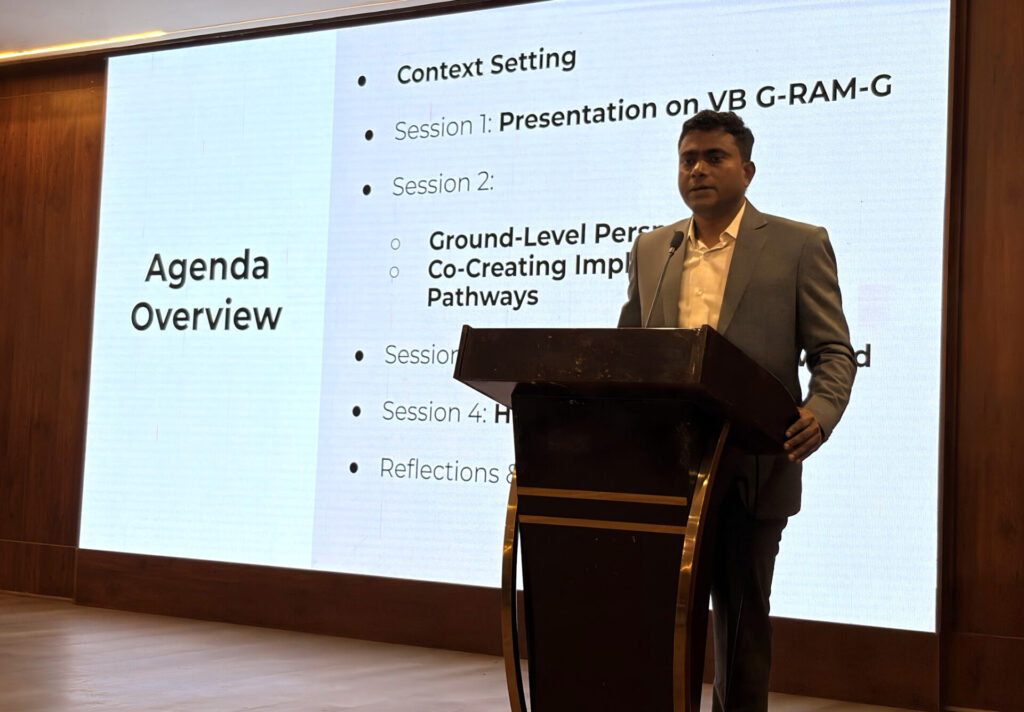
The workshop was designed not as a one-way briefing, but as a participatory exercise. Presentations were paired with group discussions, allowing field functionaries to share feedback and surface operational challenges. These inputs, he emphasised, would play a key role in refining implementation strategies before the start of the new financial year.
While the Act introduces changes in modalities and operational guidelines, it also opens up new opportunities. The provision of a normal allocation to states, rather than allocations tied strictly to past performance, was highlighted as a significant shift. At the same time, the Director cautioned that performance in the current financial year would continue to influence future resource availability, particularly the non-material component. The message was clear. The months ahead remain critical in shaping the state’s positioning under the new framework.
Building on this, Shri Sampath Kumar, IAS, Principal Secretary, Community & Rural Development Department, framed the discussion around a broader question. How can systems identify and empower the right people on the ground to drive rural transformation?
Drawing from administrative experience, he emphasised that community participation remains the foundation of effective implementation. In earlier programmes, direct engagement with communities had helped uncover gaps and leakages, leading to the introduction of social audits and greater transparency. By placing information in the public domain at the village level, communities were able to take ownership, strengthening both accountability and outcomes.
He reflected on the evolution of the Village Development Concept, where structured community participation contributed to both development and stability in previously underserved areas. The lesson, he noted, was consistent. When communities are involved not just as beneficiaries but as participants, programmes tend to perform better.
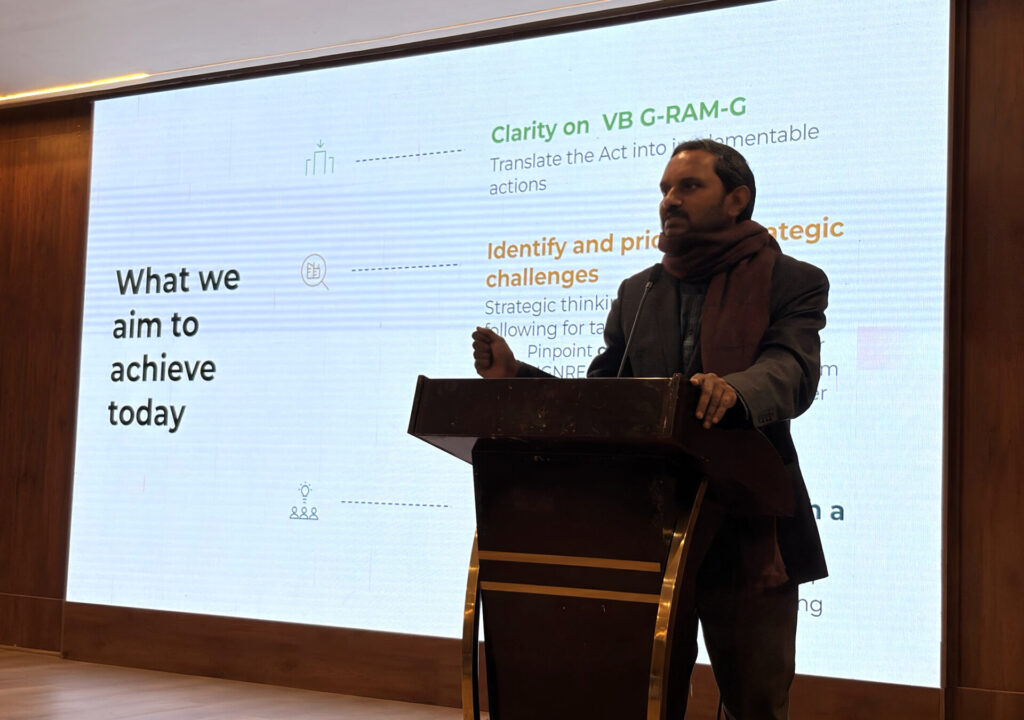
The discussion also turned to leadership. Strong ownership at the block and district levels, he said, is often the difference between incremental progress and scale. When administrative leadership aligns with field-level execution, programmes are able to expand in both coverage and impact.
Within this framework, Village Employment Councils (VECs) were identified as central to implementation. Strengthening their functioning through participatory planning, regular disclosures, and alignment with broader development goals could directly contribute to reducing multidimensional poverty and improving household incomes.
Operational priorities were discussed in practical terms. These included strengthening planning processes, addressing constraints in the material component, improving technical coordination, and ensuring convergence with livelihoods, natural farming, and skill development initiatives. Administrative allocations, he noted, should be effectively utilised, particularly for training and capacity-building efforts. There was also a clear push to expand livelihood opportunities, including greater engagement of men in income-generating activities.
The importance of convergence extended beyond rural development programmes. Opportunities to align with sectors such as education and early childhood development were highlighted, including the potential to co-locate community infrastructure with school facilities to maximise impact.
At the centre of the workshop was a detailed presentation by Ms. Iaraphunlin Diengdoh, Joint Mission Director, SRES, who outlined the architecture of the new Act. The framework marks a shift towards a more integrated and convergence-driven approach to rural governance, built around four core principles: empowerment, growth, convergence, and saturation.
A key feature of the new system is the development of a rural data stack, designed to improve planning accuracy, reduce duplication, and minimise leakages. Village-level plans will now feed into a larger National Rural Infrastructure Stack, ensuring that local priorities are reflected in higher-level decision-making.
The Act identifies four priority areas for intervention: water security, core rural infrastructure, livelihood-related infrastructure, and mitigation of extreme weather vulnerabilities. Planning and implementation will follow a unified structure, with convergence across departments at the panchayat level and aggregation of plans from block to district and state levels.
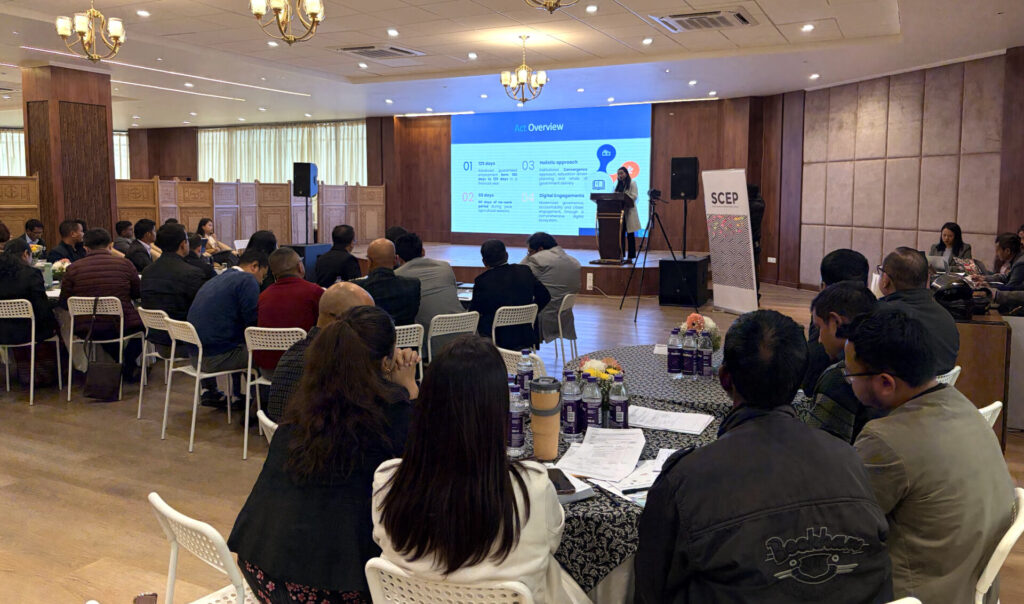
Financially, the programme will operate on a 90:10 funding pattern between the Centre and the State, with clear separation of accounts for wages, administrative costs, and unemployment allowance. The emphasis on transparency is equally strong. Biometric authentication, technology-enabled monitoring, and weekly public disclosures at the VEC level are expected to strengthen accountability and improve tracking of outcomes.
Implementation readiness remains a priority. Ensuring Aadhaar and bank account linkage for job card holders, aligning planning cycles with agricultural seasons, and strengthening awareness at the field level were all identified as critical steps. Job cards will remain valid for three years, with renewal linked to authentication requirements.
Across the discussions, a consistent theme emerged. The success of the new Act will depend not just on policy design, but on the strength of implementation systems and the ability to adapt to ground realities. Continuous feedback from districts and blocks will be essential in refining processes over time.
As the workshop concluded, the focus shifted towards next steps. Participants were expected to leave with a clearer roadmap, defined timelines, and a shared understanding of priorities. More importantly, the session reinforced a broader shift in approach, one that places community participation, institutional convergence, and strong field-level leadership at the centre of rural development.