

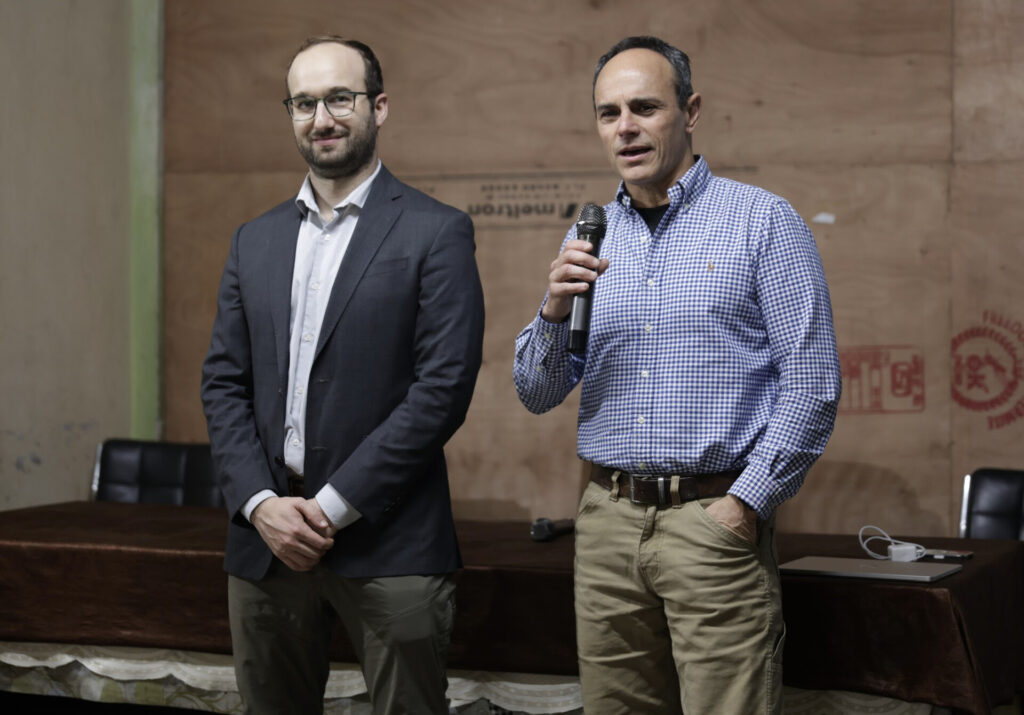
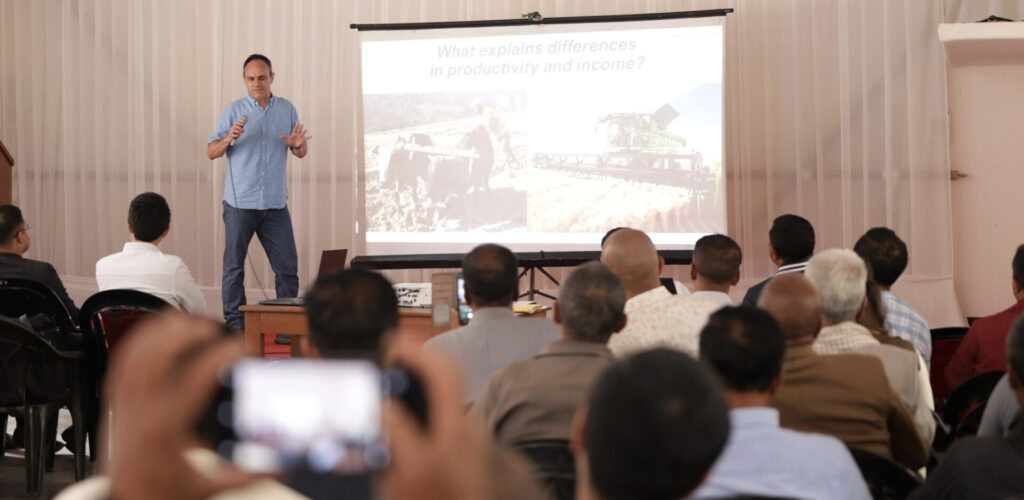
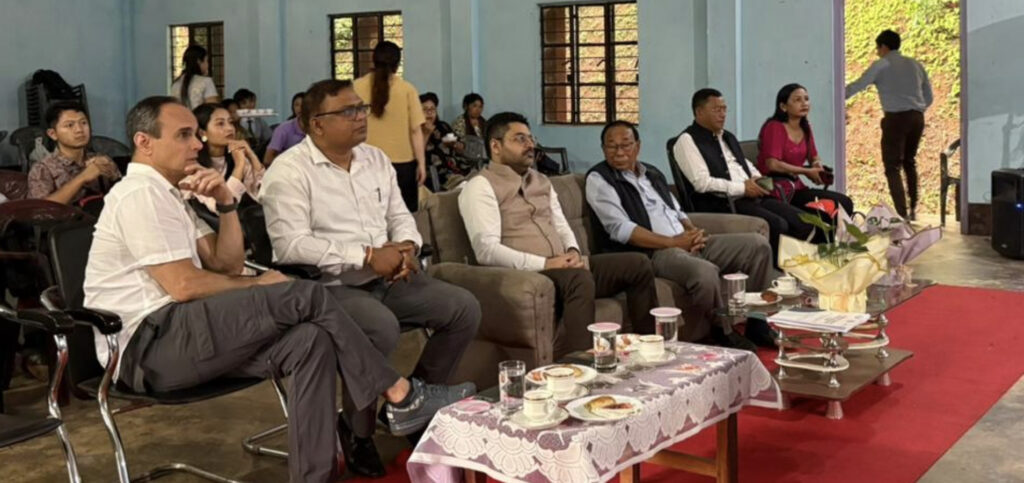
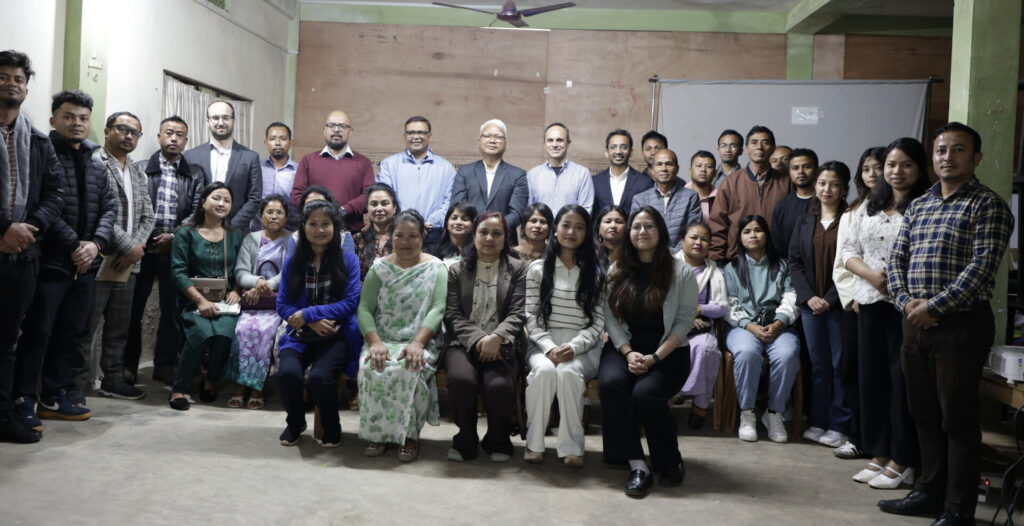
The Meghalaya Institute of Governance (MIG), in collaboration with the Government Innovation Lab (GIL), Harvard Growth Lab (HGL), and the Indian School of Business (ISB), successfully conducted a series of constituency-level workshops under the MPOWER Youth Employment and Economic Growth Component. Held across Nongthymmai, Nongstoin, Resubelpara, Umsning, and Jowai constituencies, the workshops brought together elected representatives, traditional leaders, faith-based organisations, Self-Help Groups (SHGs), youth, entrepreneurs, farmers, and government officials to identify practical pathways for creating jobs and strengthening local economies.
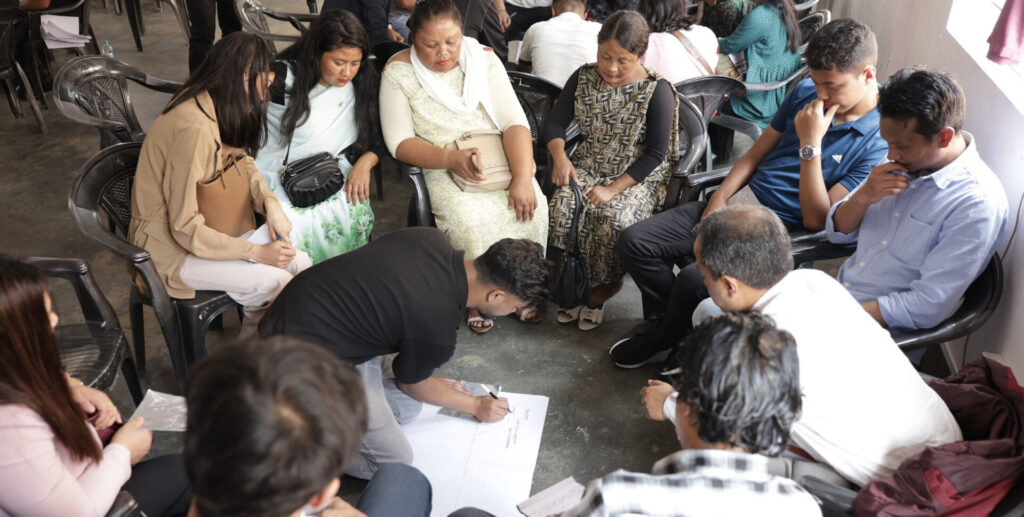
The workshops were designed around the principles of Problem Driven Iterative Adaptation (PDIA) and Adaptive Leadership, enabling participants to move beyond symptoms and collectively identify the underlying constraints limiting economic growth and employment generation in their constituencies. Through facilitated discussions, participants mapped existing economic strengths, identified tradable opportunities, diagnosed binding constraints, and began designing small, locally owned pilot initiatives that can be tested and refined over time.
A recurring theme across all constituencies was the recognition that sustainable economic growth will require stronger private-sector and entrepreneurial pathways. Participants repeatedly highlighted the need to move beyond dependence on government employment and instead invest in sectors capable of generating income from outside the local economy.
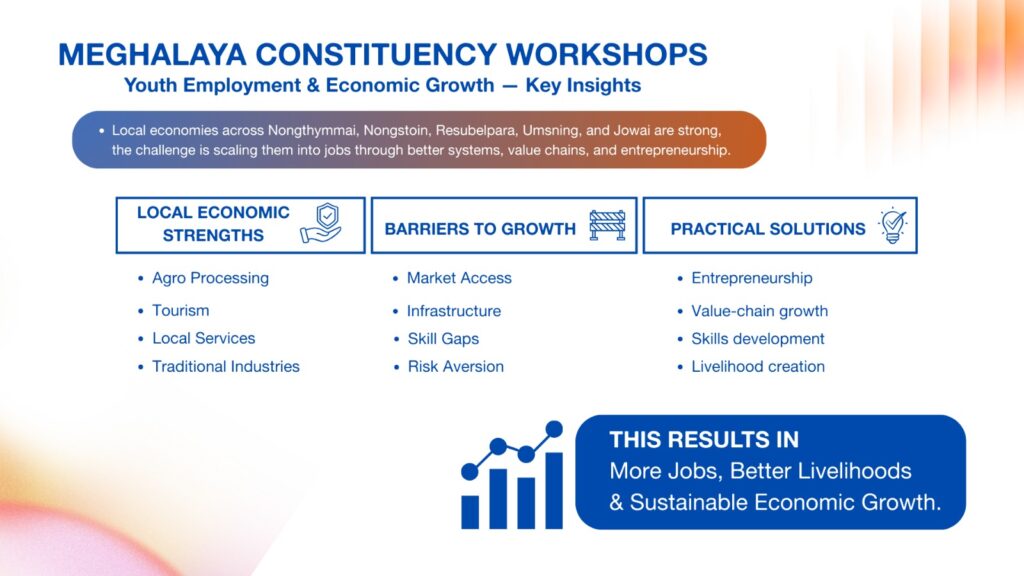
Across the workshops, participants demonstrated a strong understanding of their local economic realities. While each constituency possesses unique strengths, common opportunities emerged around agro-processing, tourism, value addition, traditional crafts, livestock, and service-based enterprises. Equally, participants identified a set of recurring constraints including limited market access, skills gaps, inadequate infrastructure, weak aggregation systems, and a general reluctance to take entrepreneurial risks.
Nongthymmai: Building Scale Through Aggregation and Services
In Nongthymmai, participants highlighted the constituency’s strategic location, proximity to Shillong’s markets, and strong service-sector ecosystem as key strengths. Restaurants, bakeries, automobile services, housing, educational institutions, hospitality businesses, and a growing network of micro-enterprises already provide livelihoods for many residents.
Participants noted that Nongthymmai produces and sells a range of agricultural products, processed foods, dairy products, and services outside the constituency. However, most production remains fragmented and small-scale. A key challenge identified was the absence of platforms that can aggregate produce and connect farmers to larger markets.
Future opportunities identified included organic food processing, vocational training centres, healthcare-linked employment, hospitality services, hydroponic farming, and common platforms for Farmer Producer Groups (FPGs). Participants also expressed interest in expanding local food processing enterprises producing products such as cheese, sausages, pickles, juices, and wine.
The workshop highlighted several constraints including shrinking agricultural land due to urbanisation, inadequate storage facilities, middlemen-driven market systems, limited entrepreneurial skills, and risk aversion among youth and farmers. Participants agreed that future interventions should focus on value addition, collective enterprise models, and service-sector growth rather than land-intensive agriculture.
Nongstoin: Leveraging Natural Resources and Rural Enterprise
The Nongstoin workshop revealed a highly diverse rural economy built around agriculture, tourism, mining, traditional industries, and self-employment. Participants identified potato, squash, ginger, strawberry, Eri silk, honey, broomstick, timber, traditional medicines, and indigenous wines as important economic strengths already generating income for local households.
The constituency also demonstrated significant potential for agro-processing, bamboo industries, textile production, fish farming, and tourism development. One particularly distinctive idea that emerged was the possibility of developing a medical supplies manufacturing ecosystem focused on products such as gauze, bandages, and gloves.
Participants identified several barriers to growth including poor road connectivity, inadequate cold storage facilities, unreliable electricity supply, limited access to professional training institutions, and a lack of investment. A unique issue raised during the workshop was the impact of land ownership structures and Sixth Schedule-related investment challenges, which participants felt can sometimes discourage private investment.
Despite these challenges, discussions reflected strong optimism about attracting private sector partnerships and building local enterprises around the constituency’s rich natural resource base.
Resubelpara: Unlocking Value Addition and Rural Entrepreneurship
In Resubelpara, agriculture remains the backbone of the local economy. Paddy, maize, ginger, turmeric, broom grass, banana, arecanut, piggery, and poultry provide livelihoods for most households, while active SHGs and strong informal trading networks contribute significantly to local economic activity.
Participants observed that much of the constituency’s income currently comes from the sale of raw agricultural products to markets in neighbouring Assam. While proximity to external markets offers opportunities, it also creates dependency, with producers often receiving low prices while traders and intermediaries capture a larger share of the value.
The workshop identified considerable potential in agro-processing industries such as ginger drying, turmeric processing, spice packaging, banana value addition, and livestock enterprises. Traditional handicrafts, jewellery making, weaving, and particularly eri silk production emerged as promising sectors capable of generating employment for women and youth.
Participants also discussed several structural barriers including limited access to finance, low levels of business confidence, inadequate infrastructure, weak market linkages, and a prevailing perception that government jobs are the safest employment option. Many noted that while entrepreneurial talent exists, greater mentoring, market exposure, and business development support are needed to help local enterprises grow beyond household-level operations.
Umsning: Strengthening Production, Processing and Market Systems
The Umsning workshop highlighted the constituency’s strengths in horticulture, livestock, tourism, retail trade, transportation, and small-scale manufacturing. Participants pointed to the growing production of strawberries, mushrooms, ginger, vegetables, dragon fruit, poultry, dairy products, and processed food products such as pickles and canned pineapple.
Its strategic location along the National Highway has helped create a vibrant retail economy, while tourism-related enterprises, resorts, homestays, fisheries, and mechanical workshops continue to expand.
Future opportunities identified by participants included fruit processing, wine production, dairy product manufacturing, animal feed mills, cold storage infrastructure, logistics services, and wellness-related businesses such as beauty and spa services.
However, several constraints continue to limit growth. Participants highlighted low production volumes, high input costs, inadequate processing skills, weak packaging systems, poor infrastructure, land-related challenges, and limited confidence among entrepreneurs. Discussions also underscored the importance of improving market linkages and strengthening technical support systems to help local enterprises achieve scale.
Jowai: Harnessing Education, Heritage and Innovation
Jowai emerged as one of the most diversified local economies among the participating constituencies. Participants identified strong capabilities in trade, higher education, tourism, hospitality, agriculture, food processing, handicrafts, construction, and entrepreneurship.
The constituency’s heritage market, with longstanding trade linkages across Northeast India and Bangladesh, was highlighted as a unique economic asset. Participants also noted the presence of an educated youth population, technical skills, and growing entrepreneurial capacity.
Looking ahead, stakeholders identified opportunities in experiential tourism, remote work infrastructure, IT-enabled services, BPOs, food processing, waste recycling, renewable energy, EV charging infrastructure, and vocational training centres. Participants also discussed the potential for scaling local products such as Tungrymbai, honey, dairy products, traditional textiles, and handicrafts.
Unlike many other constituencies where infrastructure constraints dominated discussions, Jowai participants placed significant emphasis on behavioural and cultural barriers. Concerns around risk aversion, limited exposure, public-sector dependency, reluctance to migrate, and resistance to new ideas emerged repeatedly throughout the workshop. Participants noted that addressing these mindset challenges may be just as important as improving infrastructure or access to finance.
From Diagnosis to Action
Across all five constituencies, participants demonstrated a strong understanding of the economic opportunities and constraints shaping their local economies. The workshops revealed that while the sectors differ—from agriculture and tourism to services, crafts, and manufacturing—the underlying challenge remains the same: creating pathways that allow local capabilities to translate into sustainable employment and higher incomes.
The next phase of the MPOWER Youth Employment and Economic Growth initiative will focus on designing and testing a series of small, practical pilots identified during the workshops. These pilots will be implemented through collaborative partnerships involving local stakeholders, government agencies, community institutions, and private sector actors.
By combining local knowledge with adaptive problem-solving approaches, the initiative aims to generate actionable lessons that can inform broader strategies for inclusive economic growth across Meghalaya.
The constituency workshops reaffirmed a central insight: solutions to youth employment and economic growth already exist within communities. The task ahead is to unlock those capabilities, strengthen local systems, and create the conditions for innovation, entrepreneurship, and opportunity to flourish.