
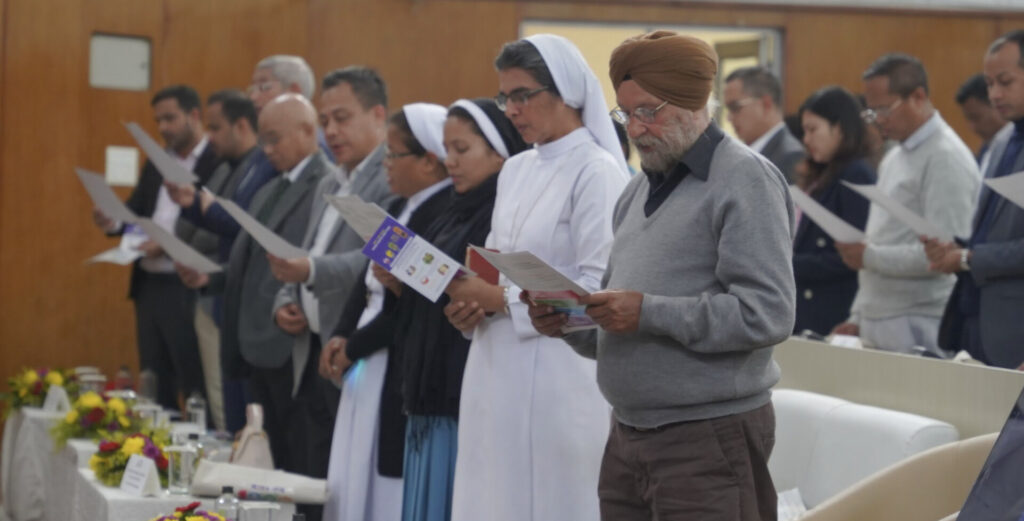
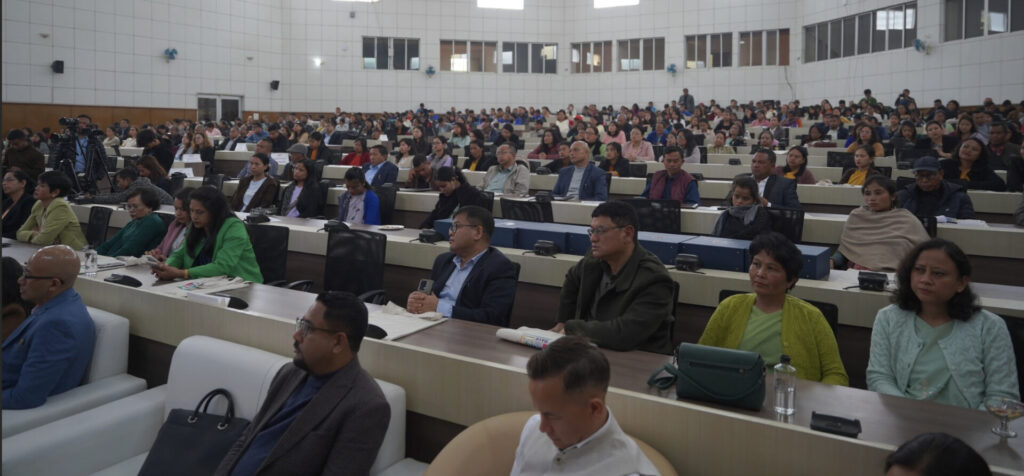
The Government of Meghalaya officially launched the ‘Mission 1000 Days’ programme on 31 March 2026 at the State Convention Centre in Shillong, marking a significant step towards advancing nutrition and early childhood development outcomes. Led under the Meghalaya Early Childhood Development Mission, the initiative focuses on the critical window from conception to a child’s second birthday through a targeted, multi-sectoral approach.
The programme is anchored in the State’s broader commitment to mission-mode governance, integrating efforts across departments and communities to address persistent challenges such as stunting, undernutrition, anaemia, and low birth weight. It reflects a shift towards sustained, outcome-oriented interventions that prioritise both maternal and child wellbeing.
The launch highlighted Meghalaya’s progress in improving health indicators over recent years. Since FY 2020-21, the State has achieved a reduction in Maternal Mortality Rate by nearly 50 percent and Infant Mortality Rate by 34 percent. At the same time, the next phase of development was positioned as one that must consolidate these gains while addressing remaining gaps in nutrition and early childhood outcomes.
A key feature of the programme is its scale and systems approach. To enable effective grassroots implementation, 750 master trainers and a network of 19,000 frontline workers have been mobilised across the State. This is further supported by the introduction of a dedicated Child-App to track the progress of every mother and child, strengthening real-time monitoring and service delivery.
Mission 1000 Days is operationalised through a five-pillar strategy focused on building capacity, empowering communities, improving nutrition, celebrating positive behaviours, and providing targeted support for vulnerable children. The approach combines service delivery with behavioural change, recognising that improved outcomes depend not only on access but also on practices at the household and community level.
Key interventions include strengthening frontline workers’ capacity in breastfeeding and nutrition, organising Mother’s Skill Workshops in collaboration with Village Organisations and Village Health Councils, and linking incentives to maternal participation. Self-Help Groups are also engaged in demonstrating nutritious meal preparation, particularly for pregnant women in the third trimester, alongside provision of hot cooked meals with eggs through existing Anganwadi Centre infrastructure.
The programme also places emphasis on targeted support for children experiencing growth faltering. Through cash transfers to Village Organisations, families are supported with access to protein-rich nutrition, ensuring that the most vulnerable children receive timely and adequate care.
The launch also bridged policy intent with material support on the ground. This included the distribution of the Chief Minister’s Mother and Baby Kits, along with outreach materials for the Chief Minister’s Headman Fellowship for Early Childhood Development. In parallel, grants were distributed to hospitals and healthcare institutions under the Meghalaya Healthcare Advancement Policy 2024 to strengthen health infrastructure across the State.
Technical collaboration and capacity-building remain central to the initiative. Partnerships with institutions such as IIT Bombay have enabled the development of localised digital resources in Khasi and Garo, alongside hands-on training for healthcare workers to improve infant growth monitoring and caregiving practices.
A recurring theme throughout the launch was the importance of convergence. Mission 1000 Days is implemented through a whole-of-government and whole-of-society approach, bringing together departments including Social Welfare, Health and Family Welfare, Community and Rural Development, Education, and Planning, alongside national institutions and community-based organisations.
By integrating systems, strengthening frontline capacity, and embedding community ownership, Mission 1000 Days represents a comprehensive effort to improve early childhood outcomes in Meghalaya. It signals a move towards sustained, scalable interventions that align policy, practice, and community action to ensure that every child has the foundation for healthy growth and development.