
The Human Development Tour continued at Ranikor Community Health Centre, where similar themes were reinforced, but with a sharper focus on scaling community-led action across the block .
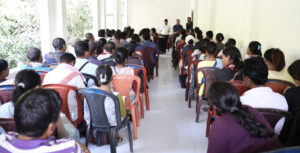
Here, the CM Headman Fellowship was again positioned as a mechanism to mobilise community institutions, particularly headmen, SHGs, and faith leaders, in addressing key human development challenges. The activation of Village Health Committees was emphasised as central to improving awareness, strengthening outreach, and supporting frontline workers.
Maternal health outcomes in the state have shown improvement over recent years, with a significant reduction in maternal deaths. However, the persistence of preventable deaths highlights the need for continued effort. Institutional delivery remains the most critical intervention, and as discussions revealed, ensuring access requires addressing everyday constraints faced by families.
The expansion of Child Care Support under existing schemes reflects an attempt to bridge this gap. By enabling community institutions to support families during childbirth, the programme shifts the responsibility from individuals to collective systems, increasing the likelihood of safer deliveries.
Child stunting, however, remains one of the most pressing challenges. Nearly half of the children in the state continue to fall below expected growth standards, driven by inadequate nutrition, low rates of exclusive breastfeeding, and limited dietary diversity. The long-term consequences, particularly on cognitive development and educational outcomes, were repeatedly emphasised.
Discussions also highlighted the importance of parental engagement in early childhood development. Beyond nutrition, interaction, play, and emotional support were recognised as critical components of healthy development. In this context, the role of fathers was specifically emphasised, marking a shift towards more inclusive caregiving practices within communities.
Adult male mortality formed the third pillar of the engagement. With a high proportion of men dying before the age of 65, the burden of non-communicable diseases has become increasingly visible. Health officials stressed the importance of regular screening and early detection, particularly through community-level outreach by ASHAs using tools such as CBAC forms.
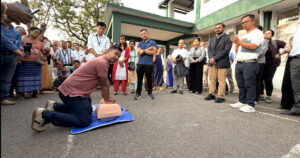
The visit also introduced practical elements aimed at strengthening community preparedness. A demonstration on Cardio Pulmonary Resuscitation (CPR) generated strong interest among participants, highlighting the value of integrating life-saving skills into community awareness programmes.
Interactions with community leaders and frontline workers reflected both progress and constraints. While awareness has improved in areas such as institutional delivery and immunisation, challenges remain in changing perceptions around issues like stunting, which is often seen as genetic rather than preventable. Workforce shortages and infrastructure gaps continue to place pressure on service delivery, even as frontline workers maintain strong relationships with communities.
What emerges from Ranikor is a clearer understanding that improving outcomes will require sustained convergence. Health, nutrition, and social welfare interventions must operate together, supported by community leadership and administrative systems.
Across both Wahkaji and Ranikor, the Human Development Tour reinforces a broader shift in Meghalaya’s development approach. The focus is no longer limited to expanding infrastructure, but on ensuring that systems translate into outcomes. By placing communities at the centre, the CM Headman Fellowship attempts to bridge this gap, turning intent into action at the last mile.