
Day 2 of the Cabinet Retreat shifted focus from foundational commitments to economic and developmental opportunities, examining how Meghalaya can unlock growth, jobs, and resilience over the next decade through the 10 State Opportunities framework.
Day 1 Reflections and Leadership Direction
The day began with reflections by Shri Sampath Kumar, IAS, Development Commissioner, followed by an address by Shri Conrad K. Sangma, Hon’ble Chief Minister. The leadership reiterated that commitments ensure basic outcomes, while opportunities create aspiration, livelihoods, and long-term prosperity.
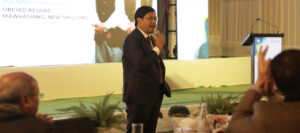
Technical Sessions: The 10 Opportunities
Senior officers and departments presented sectoral roadmaps covering:
- Investment Promotion and Private Sector Development & Public Investment
Presented by Dr. Vijay Kumar, IAS, outlining strategies to crowd in private investment and strengthen public investment efficiency. - Agriculture and High-Value Horticulture
Presented by Smti. Isawanda Laloo, IAS, Secretary, Agriculture and Farmers’ Welfare, focusing on diversification and value chains. - Animal Husbandry and Fisheries
Joint presentations by Animal Husbandry and Fisheries departments on livelihood expansion. - Sports and Creative Economy
Presented by Sports and Youth Affairs and Meghalaya Arts and Literature (MAL), positioning sports and creativity as economic sectors. - Entrepreneurship and Skilling
Presented by Commerce and Industries and MBMA, with emphasis on placement-linked skilling, international opportunities, and youth-centric planning. - Tourism, Arts, Culture, and Heritage
Presented by Tourism and Arts and Culture departments, highlighting convergence with local enterprises and identity-driven growth. - Urban Transformation
Presented by Dr. Vijay Kumar, IAS, focusing on planned urbanisation and service delivery. - Climate Resilient Green Economy
Presented by Shri M. B. K. Reddy, IFS, Principal Secretary, Forest and Environment, along with Soil and Water Conservation and MBMA. - Regional Connectivity and Border Trade
Presented by Commerce and Industries and PWD, focusing on trade corridors and regional integration.
Special Sessions and Ground Reflections
Special sessions covered Law and Order, Training, and Administrative Reforms, followed by reflections from Deputy Commissioners and BDOs on nutrition, education, entrepreneurship, and climate resilience.
Closing Session
In his closing remarks, the Chief Secretary, Dr. Shakil P. Ahammed reminded the gathering that the purpose of the retreat was not merely review, but renewal. He reflected that “Governance cannot be static and should evolve. Processes become too familiar and systems get fixed,” urging officers to consciously break patterns that limit impact.
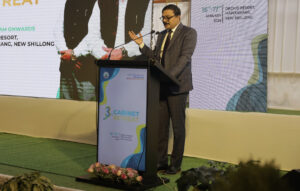
He called for “collaboration over silos” and a culture of “continuous improvement, small thoughtful and impactful change,” noting that in public service even incremental reforms can reshape systems and restore public trust.
In doing so, he framed the retreat as an opportunity to exercise both courage and judgement, and to serve with integrity, purpose, and collective ownership of outcomes.