
The Human Development Tour led by the Principal Secretary and Development Commissioner to the Government of Meghalaya reached Wahkaji Primary Health Centre on 3rd March 2026, placing one of the state’s most remote regions at the centre of a broader conversation on health, nutrition, and community-led governance .
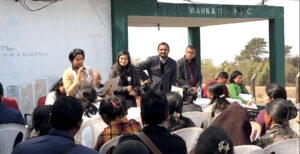
The visit was not positioned as a routine review, but as part of a larger effort to strengthen last-mile service delivery, activate Village Health Committees (VHCs), and build demand for essential health and nutrition services at the community level. Alongside officials and frontline workers, the presence of headmen, SHGs, Village Organisations, and faith leaders reflected a deliberate shift towards collective ownership of development outcomes.
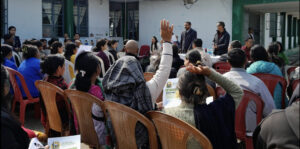
At Wahkaji, the launch of the Chief Minister’s Headman Fellowship (CMHF) marked a central moment of the engagement. Designed as a one-year, community-driven effort, the fellowship brings together headmen, faith leaders, and women leaders to work alongside frontline systems in improving human development indicators. The approach recognises that while infrastructure expansion has been significant, outcomes in health, nutrition, and education require deeper engagement at the village level.
Discussions during the visit were grounded in both data and lived realities. The region continues to face high levels of child stunting, with nearly one in two children affected. The implications go beyond physical growth, extending to cognitive development and long-term learning outcomes. The first thousand days of life, from conception to the age of two, were repeatedly emphasised as a critical window where interventions in nutrition and caregiving can have lifelong impact.
Nutrition practices emerged as a key area of concern. Diets for young children often remain limited, with rice, dal, and potatoes forming the staple, and limited inclusion of protein-rich or diverse food groups. The importance of exclusive breastfeeding for the first six months, followed by appropriate complementary feeding, was reinforced through both field observations and supporting evidence. Low rates of exclusive breastfeeding, as indicated by previous studies, continue to be a significant contributor to stunting.
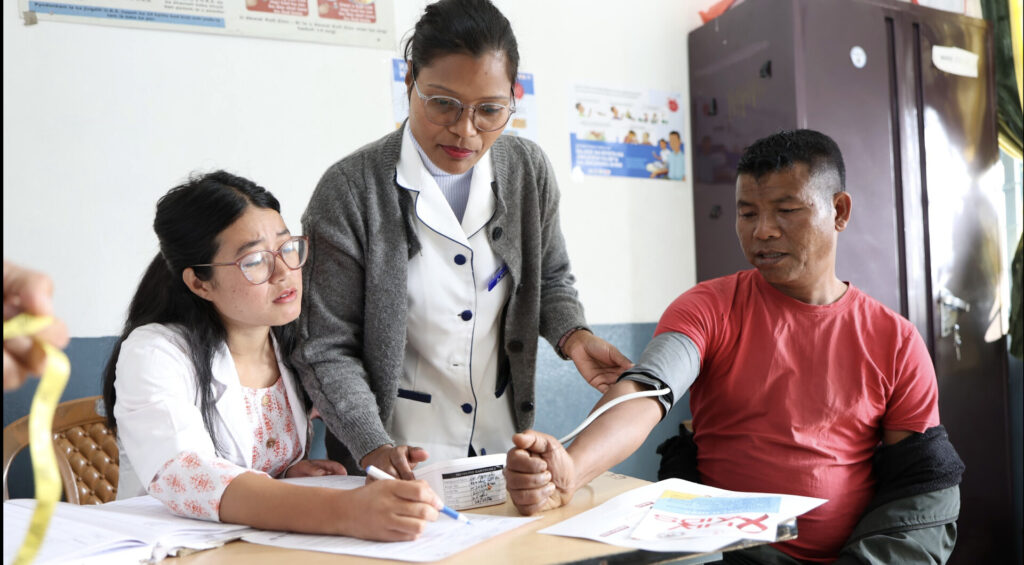
At the same time, maternal health discussions revealed a more complex set of challenges. While efforts under the Chief Minister’s Safe Motherhood Scheme have contributed to a reduction in maternal mortality, gaps remain in ensuring consistent institutional delivery. The reasons are often practical rather than ideological. Families struggle with childcare responsibilities, distance, and access, leading many to continue home deliveries.
The introduction of Child Care Support, facilitated through SHGs and Village Organisations, was presented as a critical intervention. By enabling communities to temporarily support families with young children, the programme addresses one of the most immediate barriers to accessing institutional care. This approach reflects a broader principle emerging from the tour: solutions must be embedded within community systems to be effective.
Concerns raised during the interaction further highlighted service delivery gaps. The absence of Anganwadi Centres in certain villages, manpower shortages at sub-centres, and delays in accessing healthcare services continue to shape outcomes. Frontline workers also pointed to deeper social challenges, including teenage pregnancies and reluctance among some young mothers to access institutional care due to fear of legal implications.
At the same time, the visit underscored the importance of trust in health-seeking behaviour. Communities are more likely to engage with services when supported by familiar frontline workers, reinforcing the need to strengthen these relationships. Suggestions such as the formation of Rapid Response Teams to assist pregnant women during emergencies reflect attempts to build on this trust-based model.
The scope of the discussion extended beyond maternal and child health to include adult male mortality, an area of growing concern in the state. Non-communicable diseases such as hypertension, diabetes, cancer, and tuberculosis were identified as key contributors. The need for regular screening, early detection, and lifestyle changes was emphasised, particularly for men above the age of thirty.
Across the engagement, a consistent message emerged. Improving human development outcomes requires more than schemes or infrastructure. It requires sustained community engagement, stronger local leadership, and convergence across departments. The CM Headman Fellowship, in this context, is positioned not as a standalone programme, but as a platform to align these efforts.