
The State Human Development Tour reached Byrnihat and Umden Primary Health Centres in Ri Bhoi district, with facility-level engagements led by the Additional Chief Secretary and Development Commissioner, along with the State Human Development team. The visits brought together district officials, frontline workers, and community leadership to strengthen last-mile delivery of health and nutrition services, while supporting activation of Village Health Committees and improving community-level demand generation.
The engagements highlighted both progress and persistent challenges in translating service availability into improved outcomes. While infrastructure and schemes are in place, gaps remain in service uptake, behavioural change, and coordination across systems. The visits reinforced the need to move beyond provisioning towards strengthening community-led accountability and participation.
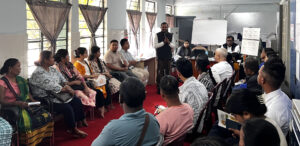
The discussions were anchored around the Chief Minister’s Headman Fellowship (CMHF), positioned as a key platform to mobilise headmen, faith leaders, and women leaders from Self-Help Groups and Village Organisations. The fellowship aims to strengthen community leadership and ensure sustained engagement on human development indicators, particularly through activation of Village Health Committees and regular community-level interactions.
Three priority areas emerged clearly across both facilities. The first focused on reducing maternal mortality. While the State has made significant progress through initiatives such as the Chief Minister’s Safe Motherhood Scheme, the persistence of home deliveries in certain areas points to practical and social barriers. Lack of childcare support during delivery remains a key constraint, with the Child Care Support Initiative highlighted as a critical solution. The role of ASHAs, community leaders, and local institutions in ensuring early registration, tracking pregnancies, and facilitating institutional delivery was strongly emphasised.
The second priority centred on addressing child stunting and improving early childhood development outcomes. The importance of the first 1000 days of life was reiterated, with a focus on nutrition and early stimulation. Participants were encouraged to promote exclusive breastfeeding, appropriate complementary feeding, and dietary diversity. At the same time, discussions highlighted the need to expand understanding beyond nutrition intake to include caregiving practices such as play, communication, and early interaction, which are essential for cognitive and socio-emotional development.
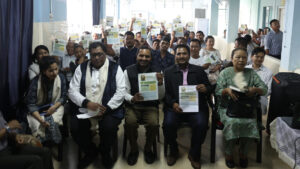
The third area of focus was adult male health, particularly the growing burden of non-communicable diseases. Low participation of men in preventive health check-ups continues to delay early detection and treatment. Community leaders were encouraged to actively promote regular screening and healthier lifestyle practices, with a focus on normalising preventive care within communities.
Community engagement emerged as a central theme across the visits. Where local leadership is active, there is stronger uptake of institutional delivery, immunisation, and awareness initiatives. However, engagement remains uneven, indicating the need for structured platforms such as CMHF to ensure consistency and sustained behaviour change.
The visits also highlighted persistent barriers despite the availability of schemes and services. These include preference for home deliveries due to caregiving responsibilities, immunisation hesitancy, and limited male participation in health programmes. These challenges underline the need for continuous community engagement alongside service delivery.
Gaps in awareness around early childhood development were also evident. While nutrition is often understood in terms of food, there is limited recognition of the importance of early stimulation and caregiving practices. Strengthening awareness at the household level remains critical to improving long-term outcomes.
Frontline workers, particularly ASHAs, continue to play a central role in last-mile delivery. However, the burden on frontline systems highlights the need for stronger convergence with SHGs, Village Organisations, and Village Health Committees to distribute responsibilities and improve efficiency.
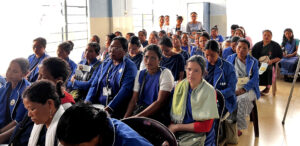
Infrastructure constraints in certain facilities, including gaps in water supply, electricity, and internal connectivity, were also noted as factors affecting service delivery and utilisation. Addressing these gaps is essential to improving both service quality and community trust in public health systems.
A recurring theme across the engagements was the importance of convergence and coordination. Improving human development outcomes requires alignment across departments, frontline workers, and community institutions. Strengthening monitoring, documentation, and feedback systems was also identified as critical to tracking progress, identifying gaps, and informing decision-making at district and state levels.
Overall, the visits underscored that improving human development outcomes in Ri Bhoi will depend not only on strengthening systems, but on deepening community engagement, building trust, and ensuring that services translate into sustained behavioural change at the household level.