
Sometimes, a missed vaccination is only the beginning of the story. During an HDLP field visit to Mawkma, a household interaction revealed wider health, caregiving and documentation challenges—and opened the door to support.
Mawkma, East Khasi Hills | April 22, 2026
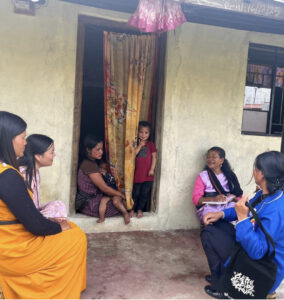
A household identified for missed childhood immunisation became the starting point for a deeper understanding of the challenges facing one family in Mawkma. During a field visit under the Health and Development Linkages Programme (HDLP), the Block Health and Development Team (BHDT) discovered that the issue extended beyond vaccination, revealing overlapping needs related to a child’s health, caregiving responsibilities, livelihood pressures and access to essential documentation.
The visit demonstrated the importance of taking a closer, more coordinated approach to community engagement—one that seeks to understand the circumstances behind a missed health service and connect families with the support they need.
Looking Beyond the Missed Vaccinations
The household was identified for immunisation refusal involving the younger children of a 29-year-old mother raising five children. While the older children had received their vaccinations, the younger ones had not been fully immunised.
During the interaction, the team learned that one of the children had a congenital heart condition for which treatment had been discontinued during the COVID-19 lockdown. The mother was also caring for five children and an aunt with a disability, while her husband, the family’s sole earner, was frequently away for work.
The family faced additional barriers, including the absence of birth certificates for the children, who had been born at home. The mother’s caregiving responsibilities and livelihood constraints added to the complexity of accessing healthcare and other essential services.
The interaction helped the team understand that missed immunisation was part of a wider set of challenges affecting the household. While no clear reason for discontinuing the younger children’s vaccinations was established, the visit created an opportunity for further counselling and follow-up.
Connecting the Family with Healthcare
The BHDT counselled the mother on the importance of childhood immunisation and offered to accompany the family to health facilities. Although initially hesitant, she later expressed willingness to discuss the matter with her husband.
Following the intervention, immunisation was initiated for the younger children, and the matter was taken up by the health team through the Block Medical Officer (BMO). However, vaccinations have remained irregular, highlighting the need for continued engagement and follow-up.
The team also revisited the child’s congenital heart condition. The BHDT encouraged the mother to continue treatment, and the child was referred to the District Early Intervention Centre (DEIC) at Lawmali, Shillong.
The child has attended three consultations and is showing improvements. Regular follow-up appointments have been established, with the doctor advising another consultation after three months.
This progress highlights the importance of connecting families with appropriate healthcare services and maintaining continuity of care, particularly when treatment has been interrupted.
Addressing Documentation Barriers
The household interaction also brought to light a documentation challenge affecting the family’s access to support. The aunt, who has a disability, had stopped receiving disability benefits because she did not have an Aadhaar card. Previous enrolment attempts had been unsuccessful, despite an Aadhaar enrolment drive being conducted in the village.
The team encouraged the family to pursue Aadhaar enrolment and committed to coordinating with the concerned Aadhaar team. The Team Lead also advised Self-Help Groups (SHGs) and Cluster-Level Federations (CLFs) to submit a formal request for a convergence camp to help address documentation-related barriers within the community.
While the family had not yet completed the enrolment process at the time of the update, the issue had been identified and a follow-up pathway established.
The Auxiliary Nurse Midwife (ANM) and Accredited Social Health Activist (ASHA) were assigned responsibility for continued follow-up with the household.
A Community-Based Approach to Development
The household visit was part of a broader HDLP community engagement session held at Mawkma Anganwadi Centre on April 22, 2026. Approximately 60 participants—including schoolchildren, parents, community members and block officials—took part in the session.
The meeting focused on early childhood development, emphasising that nearly 90 per cent of brain development occurs during the first five years of life. Through play-based activities, discussions and a quiz, participants explored how learning through play can support children’s development and how caregivers can incorporate these practices into everyday life.
During the discussion, parents identified livelihood pressures, including working in fields or travelling to distant locations, as challenges that limited the time they could spend engaging with their children. The team encouraged families to apply the lessons from the session at home and reviewed previous community action plans to understand progress and identify areas requiring further support.
The household visit reinforced the value of this approach: meaningful community engagement can help teams understand the circumstances behind a family’s needs and identify opportunities for coordinated action across health and social support systems.
From Identification to Follow-Up
The Mawkma field visit illustrates how a household-level interaction can reveal needs that might otherwise remain unaddressed. What began as a follow-up on missed immunisation brought attention to a child’s ongoing medical care, the family’s caregiving pressures and documentation barriers affecting access to disability benefits.
Progress has been made, including the child’s continued consultations at DEIC, the initiation of immunisation for the younger children and the identification of next steps for Aadhaar enrolment. At the same time, irregular immunisation and pending documentation remain areas requiring follow-up.
Through continued coordination among frontline health workers, community institutions and relevant service providers, HDLP seeks to strengthen the link between identifying a family’s needs and helping it access appropriate support.