

Shillong, 15 October 2026: Bringing together public health experts, policymakers, administrators and healthcare practitioners, the State Health Systems Resource Centre (SHSRC), Meghalaya, in collaboration with the Department of Health and Family Welfare, Government of Meghalaya, organised a Health Systems Strengthening Seminar at the State Convention Centre, Pinewood Hotel Annex, Shillong.
The seminar provided a platform for reflecting on Meghalaya’s progress in healthcare delivery, examining persistent challenges and identifying priorities for building a more responsive, equitable and effective health system.
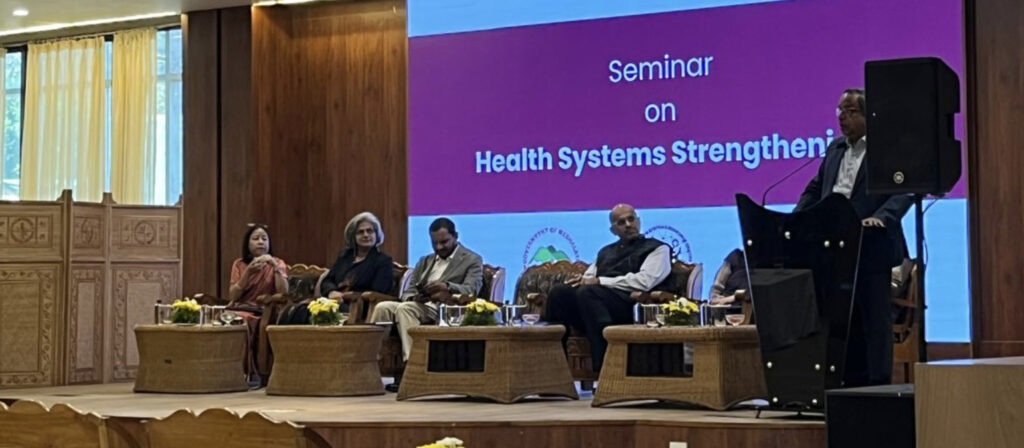
The discussions were led by Dr. T. Sundararaman, public health expert and author, who delivered the introductory address on “Health Systems Strengthening – What Should a State Focus On?”
Drawing on his experience with health systems development across different states, Dr. Sundararaman reflected on Meghalaya’s progress over the years, particularly in strengthening primary healthcare, expanding the network of Health and Wellness Centres and improving the availability of healthcare services at the peripheral level. He acknowledged the state’s progress while emphasising that expanding infrastructure and service coverage must be accompanied by improvements in actual health outcomes. He highlighted the need to address premature mortality, preventable hospitalisations, gaps in continuity of care and the effective management of diseases at the primary healthcare level.
He stressed that health systems strengthening is a continuous process requiring regular assessment, evidence-based planning and the ability to adapt to emerging challenges.
Healthcare as a Public Responsibility
Shri Ramkumar S., Health Secretary and Mission Director, National Health Mission, Meghalaya, highlighted the importance of viewing healthcare as a public responsibility rather than a service determined by an individual’s ability to pay.
Reflecting on the experience of universal healthcare systems such as the United Kingdom’s National Health Service, he emphasised the role of government in ensuring accessible and affordable healthcare for all. He also noted that improvements in healthcare cannot be measured merely through the expansion of infrastructure. Functional facilities, adequate human resources and effective service delivery remain essential to ensuring quality healthcare and better outcomes.
Taking Primary Healthcare Closer to Communities
Shri Sampath Kumar, Additional Chief Secretary, Government of Meghalaya, highlighted the importance of reaching individuals and families who do not access healthcare facilities. He emphasised that primary healthcare must extend beyond facility-based services to proactively reach communities, particularly those in remote and underserved areas. He also underscored the importance of evidence-based decision-making, adaptive leadership and stronger connections between research, policy and practice. Drawing attention to persistent public health concerns such as maternal and child mortality and anaemia, he encouraged participants to examine the evidence, identify underlying causes and translate research into practical solutions.
Connecting Public Health Knowledge with Policy and Practice
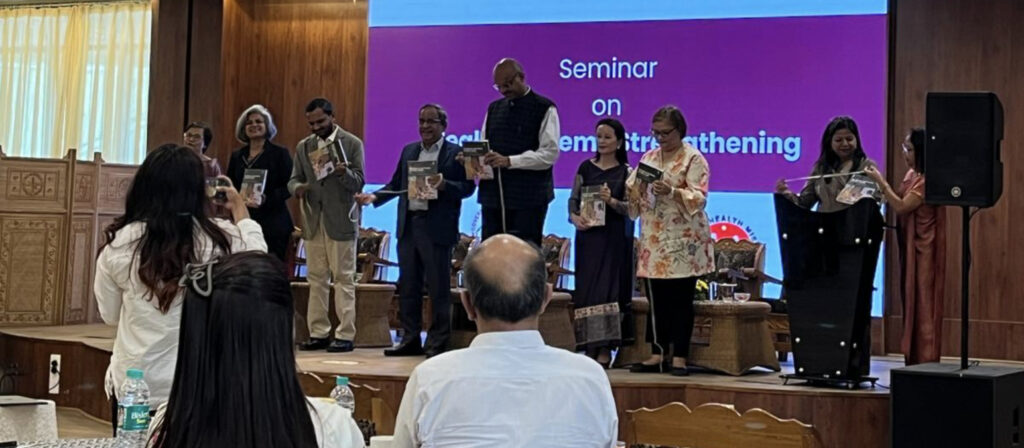
The seminar also featured a presentation by Dr. T. Sundararaman on his book on public health and health systems, which brings together lessons from decades of engagement with health policy, implementation and civil society. He highlighted that public health is not limited to scientific knowledge or clinical practice but is also shaped by social realities, public perceptions, institutions and political and economic factors. Emphasising the importance of collective action, he called for closer engagement among healthcare professionals, researchers, policymakers, educators, civil society organisations and the wider public. He also stressed that health systems strengthening must have a clear purpose: advancing the right to health and healthcare and ensuring that healthcare is recognised as a public good.
Towards a More Responsive Health System
The seminar reinforced the importance of building on Meghalaya’s existing achievements while addressing the next generation of health system challenges. Discussions highlighted the need for stronger primary healthcare, improved continuity and quality of services, community outreach, evidence-informed policymaking and sustained collaboration across the public health ecosystem.
The collective reflections provided an opportunity for the state’s public health fraternity to examine how healthcare services can become more responsive to people’s needs and translate expanded access into meaningful improvements in health outcomes.