
Meghalaya brings its early childhood development agenda to Westminster, as 20 legislators join UK leaders, researchers and global education advocates to champion investment in the earliest years of life.
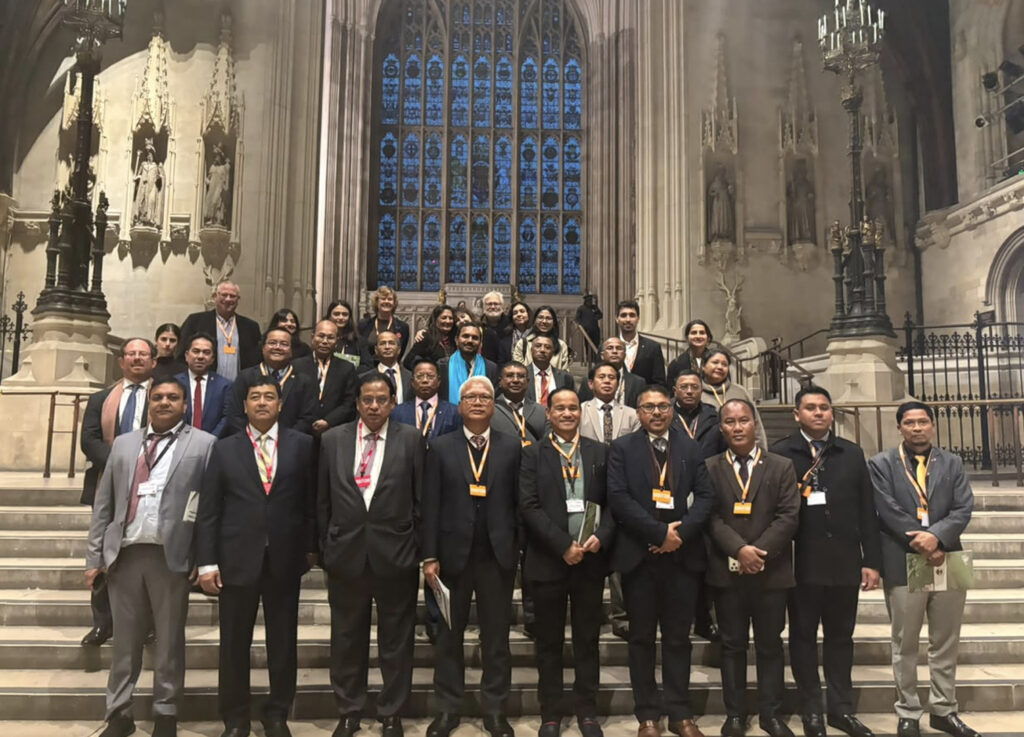
LONDON, 11 November 2026: Meghalaya has taken its commitment to Early Childhood Development (ECD) to an international parliamentary platform, with a landmark policy dialogue held at the Houses of Parliament, Westminster, London, on 11 November 2026.
Organised by the Government of Meghalaya in collaboration with global education organisation Think Equal, the dialogue brought together 20 Meghalaya legislators, led by Hon’ble Speaker of the Meghalaya Legislative Assembly Thomas A. Sangma, alongside UK parliamentary representatives, researchers and education advocates.
The one-of-its-kind parliamentary dialogue for Meghalaya at the UK Parliament provided an opportunity to exchange perspectives on the importance of investing in early childhood as the foundation for healthier, more capable and compassionate societies.
Making Early Childhood Development a Public Policy Priority
The discussions highlighted the importance of shifting public investment towards the earliest years of life, recognising that a child’s health, learning, emotional wellbeing and development are shaped by the environments and support systems available during this critical period.
Dr. Sampath Kumar, Additional Chief Secretary to the Government of Meghalaya, shared how evidence on childhood stunting and nutritional challenges, presented at a cabinet retreat, prompted Chief Minister Conrad K. Sangma to reconsider the state’s spending priorities and the importance of investing in children’s development.
This thinking underpins Meghalaya’s Early Childhood Development Mission, a whole-of-government and whole-of-society approach that integrates health, nutrition, early learning, responsive caregiving and parental wellbeing.
The state has also been strengthening frontline capacity, with approximately 22,000 frontline functionaries trained and the ECD Fellowship expanded across all 12 districts. The Fellowship engages more than 1,600 young people in supporting early learning, caregiving and family engagement, while building community-level capacity and creating livelihood pathways.
Investing Early to Address Challenges Later
A key theme of the dialogue was the importance of early intervention rather than relying primarily on investments to address social challenges after they emerge.
Dr. Julian Huppert, former Member of Parliament for Cambridge and Founding Director of the Intellectual Forum at Jesus College, University of Cambridge, called for greater emphasis on investing at the beginning of life.
“Let’s move money right to the start,” he urged.
He also highlighted the need for rigorous, independent evidence to inform early childhood interventions and establish what works, for whom and under what conditions.
Participants reflected on the long-term nature of investments in childhood development, noting that although their returns may take years to become visible, they can shape health, learning, wellbeing and human potential across generations.
Nurturing Empathy, Emotional Wellbeing and Social Cohesion
The dialogue also highlighted that early childhood development extends beyond education and academic learning. The formative years are equally important in nurturing the social and emotional capacities that influence how children understand themselves, relate to others and engage with the world.
Leslee Udwin, Founder and President of Think Equal, emphasised this broader understanding of childhood development, stating, “This is not an education issue alone.”
Through its partnership with the Government of Meghalaya, Think Equal is working to introduce structured social and emotional learning across approximately 6,188 Anganwadi/ECD centres, with a planned reach of around 200,000 children.
The programme aims to nurture empathy, emotional regulation, inclusion, respect and positive relationships, embedding these foundational capacities within government-led systems.
The dialogue also drew on Greater Manchester’s experience in advancing social and emotional learning, highlighting how leadership and collaboration across public institutions can help create more supportive environments for children and families. The exchange opened possibilities for continued peer learning and collaboration between Meghalaya and Greater Manchester.
Building Partnerships for a Shared Future
Beyond individual programmes and interventions, the dialogue underscored the importance of developing enduring public systems, institutional capacity and partnerships that place children’s development at the centre of governance.
Discussions explored opportunities for future collaboration in research, independent evaluation, institutional learning and international policy exchange, including the possibility of exploring a Commonwealth learning platform.
In his Vote of Thanks, Hon’ble Speaker Thomas A. Sangma reflected on the value of bringing together perspectives from the Global North and Global South.
“While our contexts and approaches may differ, our aspirations for children are shared,” he said, expressing hope that the dialogue would mark the beginning of continued learning and collaboration.
He further emphasised the collective responsibility of making early childhood a priority across government and society.
Investing in Children, Shaping Tomorrow
The landmark dialogue at Westminster marks an important step in bringing Meghalaya’s early childhood development agenda to the international stage.
It reinforces the state’s commitment to strengthening systems, building partnerships and ensuring that investment in children begins where it matters most: in the earliest years of life.
Because the future of a healthier, more capable and compassionate society begins with what we do for our children today.